
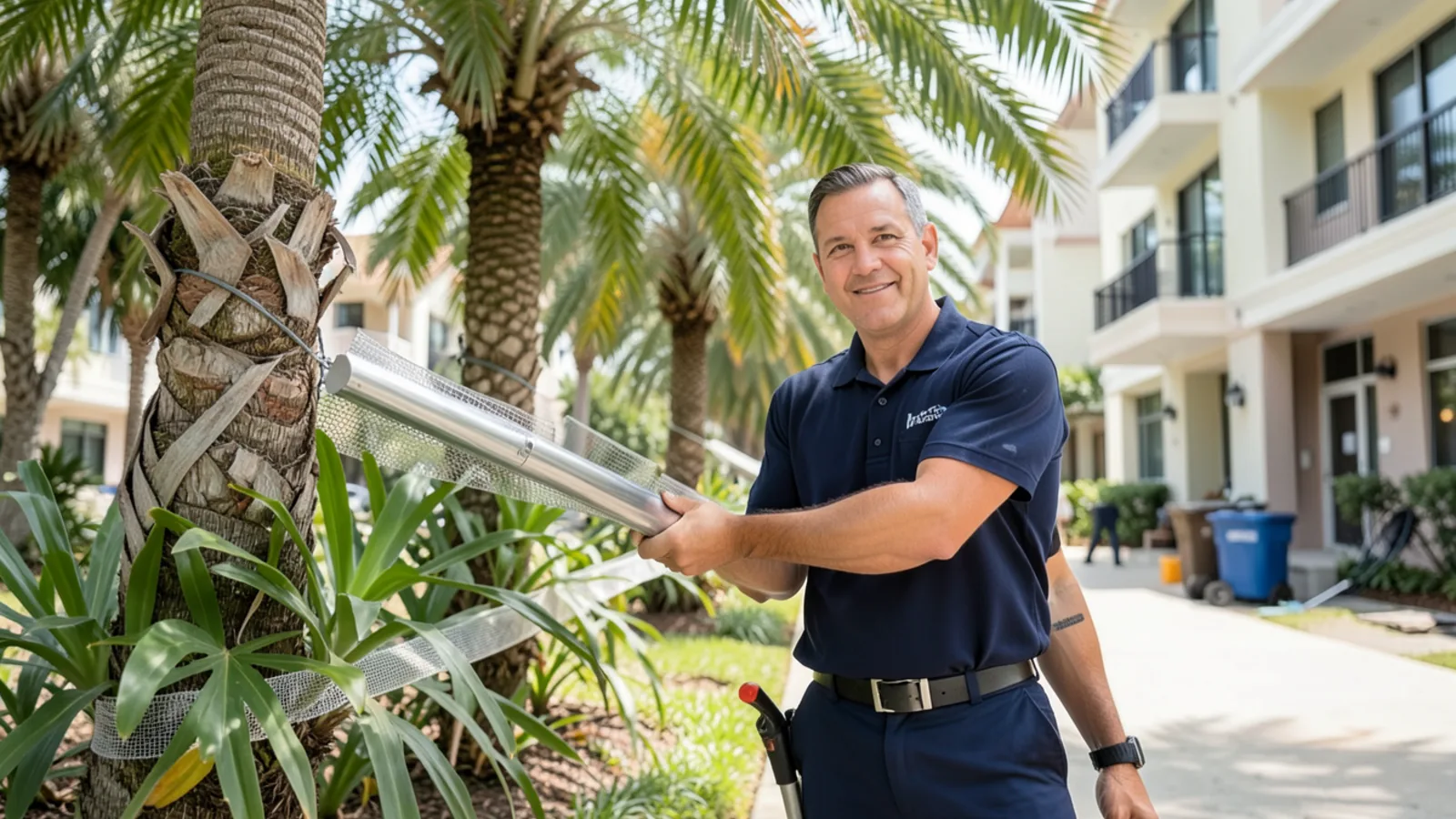
In Hialeah and Miami Lakes, surgical 304 stainless steel micro-mesh with pore apertures below 50 microns is the only gutter guard technology capable of blocking fine palm fibers, sticky ficus berries, and royal poinciana needles while capturing over 40 inches of torrential tropical rainfall per hour.
The Northwest Miami-Dade Debris Crisis: Fibrous Palms, Ficus Berries & Poincianas
Northwest Miami-Dade's dense subtropical foliage creates severe clogging challenges that defeat standard hardware screens.
Homeowners across Hialeah, Miami Lakes, and Palm Springs North face a relentless combination of subtropical flora that turns standard gutter systems into stagnant compost troughs. In Northwest Miami-Dade's established residential tracts—from 1950s concrete block homes near West 49th Street to the master-planned lakefront cul-de-sacs designed by the Graham family—neighborhoods are defined by towering mature canopies.
Unlike Northern deciduous trees that shed broad leaves once each autumn, South Florida flora sheds fibrous debris, corrosive berries, and microscopic needles continuously across twelve months of alternating dry heat and violent afternoon downpours.
Queen Palm and Coconut Palm Fibrous Petioles
Palm trees shed tough, hair-like fibers from the base of their fronds known as boots. As fronds flex in gusty trade winds, coarse strands peel away and wash into gutter channels. These fibrous strings do not rot quickly; instead, they weave around downspout drop outlets like nylon rope, trapping silt and creating an impenetrable bird-nest filter that backs up rainfall across eave lines.
Ficus Benjamina Fermenting Berries & Sticky Latex Sap
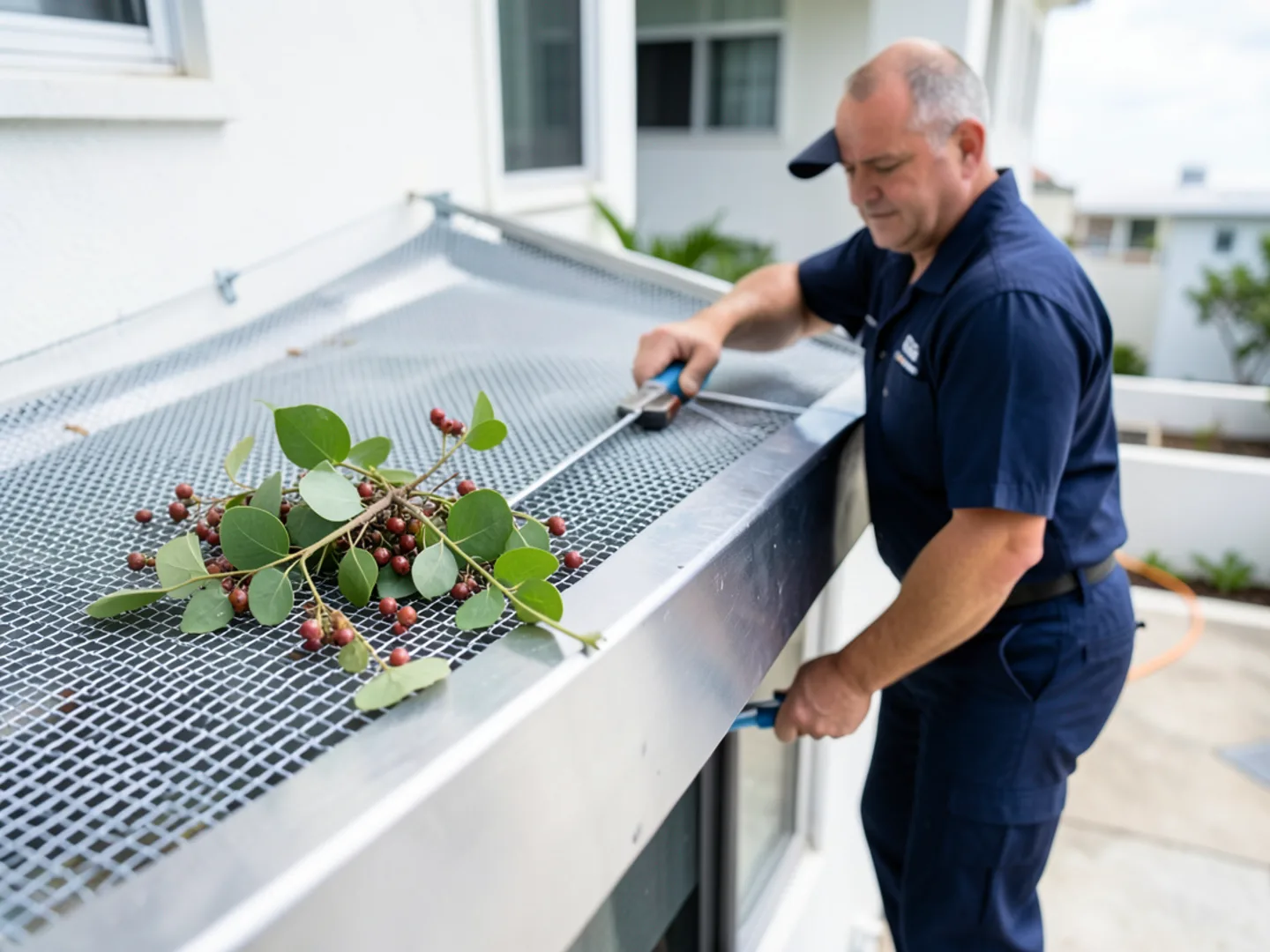
Hedges of weeping ficus (Ficus benjamina) line thousands of property boundaries throughout Hialeah and Miami Lakes. Ficus trees drop millions of pea-sized figs twice annually. When these berries fall into wet gutters, they ferment in standing rainwater, releasing sticky latex sap that combines with limestone road dust and shingle granules to form a dense asphalt-like sludge.
Royal Poinciana Feather Needles & Blossom Petals
In late spring and early summer, iconic royal poinciana trees drop millions of bipinnate compound needles measuring less than 1/8 inch across, accompanied by heavy red blossom petals. These delicate needles easily penetrate ordinary slotted gutter screens, floating down into the trough where they settle into a felt-like sediment blanket.
Need Professional Advice on Your Miami Roofline?
Speak directly with an experienced gutter technician from our NW 25th St shop.
Technical Comparison: Micro-Mesh vs. Perforated Screens vs. Foam & Helmets
An engineering evaluation of four common leaf protection systems subjected to South Florida's climate extremes.
To understand why so many aftermarket gutter guards fail in Northwest Miami-Dade, homeowners must evaluate how different filtration designs perform when exposed to tropical deluges, high ultraviolet radiation, and fine organic debris. Below is an engineering comparison of the four primary gutter protection categories installed across Florida residences:
1. 304 Marine Stainless Steel Micro-Mesh (<50 Microns)
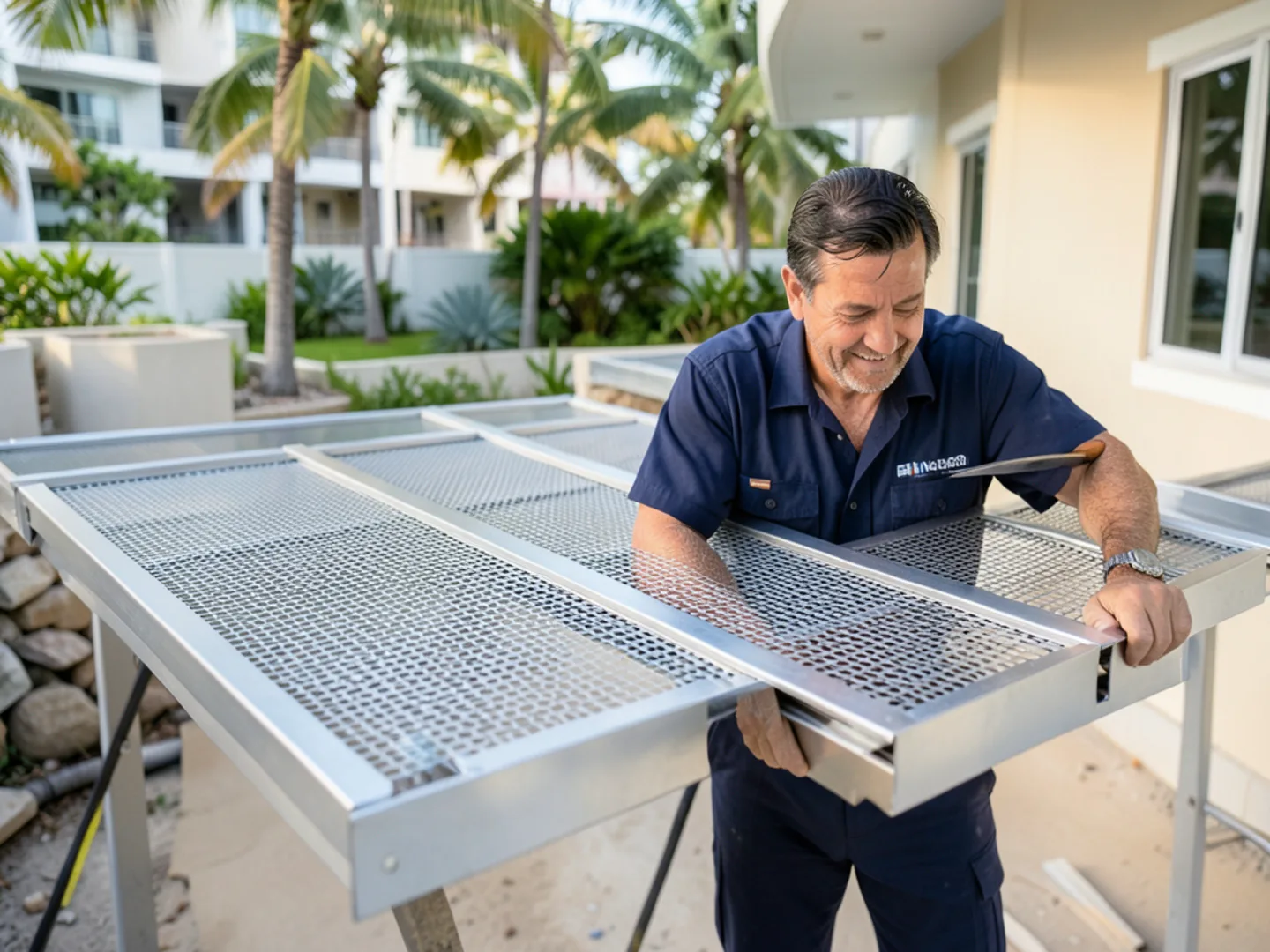
Features woven surgical-grade 304 stainless steel wire cloth with pore apertures under 50 microns (approximately 0.002 inches), supported by a rigid, powder-coated extruded 6063-T6 aluminum chassis. It blocks 100% of palm hairs, ficus seeds, and poinciana needles while capillary surface tension draws high-velocity water into the trough. It offers lifetime resistance to coastal salt air and UV degradation.
2. Perforated Stamped Aluminum Sheets (1/8-Inch to 1/4-Inch Holes)
Standard aluminum panels punched with circular or louvered holes. While effective against large palm fronds and mango tree leaves, fine ficus berries wedge inside the holes, while slender palm hairs and poinciana needles pass freely into the trough. Once trapped beneath the screwed-down cover, decomposing sludge cannot be flushed out without unscrewing the entire system.
3. Reverse-Curve 'Surface Tension' Solid Helmets
Solid metal or plastic covers engineered to curl water around a rounded nose into a narrow horizontal slit using surface tension. In South Florida's torrential convection squalls—where rainfall rates routinely exceed 3 inches per hour—fast-moving roof runoff shoots directly over the curved edge like a ski jump, gouging foundation beds and flooding rear carports.
4. Open-Cell Polyurethane Foam Inserts & Bristle Brushes
Porous foam wedges or cylindrical bottle brushes placed directly inside the gutter trough. In South Florida's heat and 90% humidity, open-cell foam degrades into crumbly black powder within 24 to 36 months under intense UV exposure. Furthermore, fine palm fibers and airborne moss spores embed within the pores, turning the inserts into elevated chia pets that hold stagnant water.
Hydraulic Inflow Physics: Capturing 40+ Inches of Rainfall per Hour Without Overshoot
The surface tension mechanics and structural slope tuning that pull heavy tropical downpours into the gutter.
A frequent objection raised by Miami-Dade homeowners is whether tightly woven micro-mesh can capture violent tropical downpours without water sheeting over the front bead. The answer lies in fluid surface tension and capillary attraction.
As high-velocity sheets of water strike the microscopic wire grid, the cohesive forces of water molecules cause the liquid to adhere to the woven stainless threads. The downward-facing convex curves of our micro-mesh matrix draw the water downward into the interior channel by capillary siphon, capturing up to 40 inches of rainfall per hour—more than three times the highest recorded rain rate in Miami weather history.
This high hydraulic capture capacity is especially critical on Hialeah homes featuring low-slope carport or patio roof additions. When runoff from large metal or insulated aluminum composite pans converges into eaves, our installers pitch guards at a precise forward tilt matching the roof angle. This geometry ensures water enters the trough while high winds sweep dried leaves and palm fibers off the smooth top surface.
Expert Engineering Insight: Protecting Fragile Tile Overhangs & Eave Ventilation
Non-invasive mounting brackets that protect concrete tiles and maintain proper eave breathing.
Many mass-market gutter guard contractors slide an aluminum mounting flange underneath the first course of roof tiles. In Miami Lakes and Hialeah, where residences feature concrete S-tile, barrel tile, or flat interlocking tiles, lifting tiles creates severe structural hazards:
Preventing Brittle Tile Fracture and Mortar Breakage
Prying up 30-year-old concrete roof tiles along the drip edge frequently cracks fragile edges, fractures mortar pack bird-stops, and punctures the underlying 90-pound mineral-surfaced underlayment. Once punctured, hidden leaks rot the underlying wood decking during tropical rainstorms.
Non-Invasive Front-Lip and Fascia Standoff Fastening
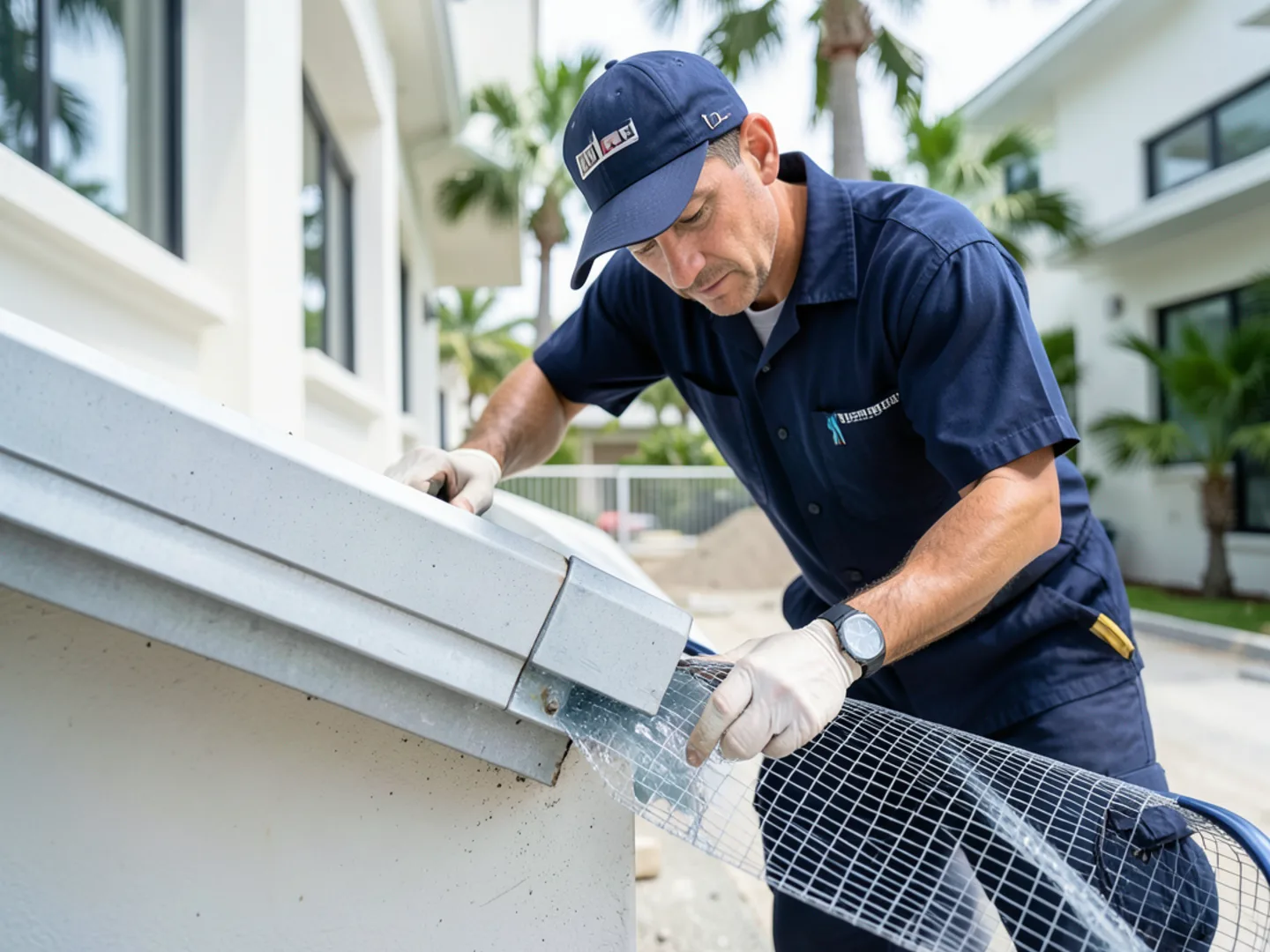
Southern Gutters FL utilizes an engineered two-point mounting bracket system. The rear chassis fastens directly to the exterior wood fascia board or gutter back-wall using high-torque ceramic-coated self-tapping screws, while the front extruded edge locks firmly over the gutter lip. The guard never touches, lifts, or penetrates roof tiles.
Preserving Continuous Attic Fascia Airflow
By mounting entirely below the roofline, our micro-mesh installation preserves continuous soffit and eave ventilation, allowing hot attic air to exhaust properly and preventing trapped condensation along structural rafter tails during humid summer nights.
A 5-Point Maintenance & Inspection Protocol for Guard-Equipped Roofs
Honest advice on long-term care and inspection routines after installing micro-mesh leaf protection.
While surgical micro-mesh eliminates the dangerous hazard of scooping rotting, bacteria-laden sludge from high ladders, no outdoor filtration system is completely maintenance-free. To ensure decades of peak hydraulic performance, we provide homeowners with this 5-point maintenance routine:
1. Semi-Annual Ground-Level Visual Scan
Inspect the eave lines from the ground twice yearly—once in May before hurricane season and once in November. Check for large palm fronds or tree branches resting across the top of the mesh.
2. Ground-Level Low-Pressure Hose Rinse
During South Florida's dry winter months (January through April), road dust, fine pollen, and agricultural dust from Redland farming can settle onto the mesh screen. A quick spray using an ordinary garden hose and an eave wand flushes away surface dust in minutes.
3. Downspout Cleanout & Pop-Up Emitter Inspection
Inspect ground-level downspout cleanouts and pop-up drainage emitters in the yard to ensure discharge springs open freely and are not blocked by mowing clippings or St. Augustine turf growth.
4. High-Velocity Valley Deflector Verification
Check that angled aluminum splash guards installed inside inside-roof valleys remain firmly aligned, preventing concentrated sheet runoff from bypassing gutter corners during sudden cloudbursts.
5. Post-Tropical Storm Structural Fastener Check
Following major tropical squalls or hurricane events, confirm that all exterior fascia bracket screws remain securely torqued and that falling limbs have not dented the extruded aluminum chassis frame.
Schedule Your Northwest Miami-Dade Gutter Guard Consultation
Partner with local sheet-metal craftsmen based right here in Miami-Dade County.
Southern Gutters FL provides homeowners across Hialeah, Miami Lakes, Palm Springs North, and Doral with custom-engineered gutter protection built specifically for South Florida's extreme weather and botanical conditions. Operating from our central facility at 7800 NW 25th St in Miami, our field crews deliver prompt, professional installations using heavy-gauge seamless aluminum gutters and surgical 304 stainless steel micro-mesh.
Protect your roof eaves, carport ceilings, and foundation landscaping from damaging water overflow today. Call Southern Gutters FL at (855) 633-0442 to schedule your free, comprehensive on-site gutter guard inspection and estimate.
Frequently Asked Questions
Do gutter guards work on palm frond fibers and ficus berries in Hialeah?
Yes. Surgical 304 marine-grade stainless steel micro-mesh with pore apertures below 50 microns completely stops fibrous palm hairs, sticky ficus berries, and royal poinciana needles. Because the pores are smaller than the organic debris, nothing enters the trough, allowing dry debris on the surface to blow away in natural breezes.
Will torrential summer downpours in Miami Lakes overflow micro-mesh guards?
No. Engineered stainless micro-mesh harnesses capillary surface tension, tested to pull up to 40 inches of rainfall per hour downward into the gutter channel. This exceeds South Florida's heaviest tropical cloudbursts by more than three times, ensuring complete water capture even on steep tile roofs and low-slope carports.
Can gutter guards be installed on tile roofs without voiding roof warranties?
Yes. In Miami Lakes and Hialeah tile communities, Southern Gutters FL installs non-invasive fascia-mounted brackets and front-lip locking channels that mount entirely below the roofline. Our technicians never lift, drill, or slide flanges beneath concrete tiles, fully preserving underlayment waterproofing and roof warranties.
How often do gutter guards need to be serviced or cleaned in South Florida?
While micro-mesh completely eliminates manual ladder cleaning and interior trough dredging, fine airborne road dust and pollen can accumulate during the dry winter months. Homeowners simply rinse the top mesh from the ground using a standard garden hose once or twice a year to maintain peak hydraulic inflow.
Authored by Southern Gutters FL Installation Team
Licensed Florida Sheet Metal & Drainage Specialists • Operating from NW 25th St, Miami
Our editorial and technical guides are reviewed by senior gutter fabricators with hands-on experience installing High-Velocity Hurricane Zone compliant seamless systems across Miami-Dade County.