
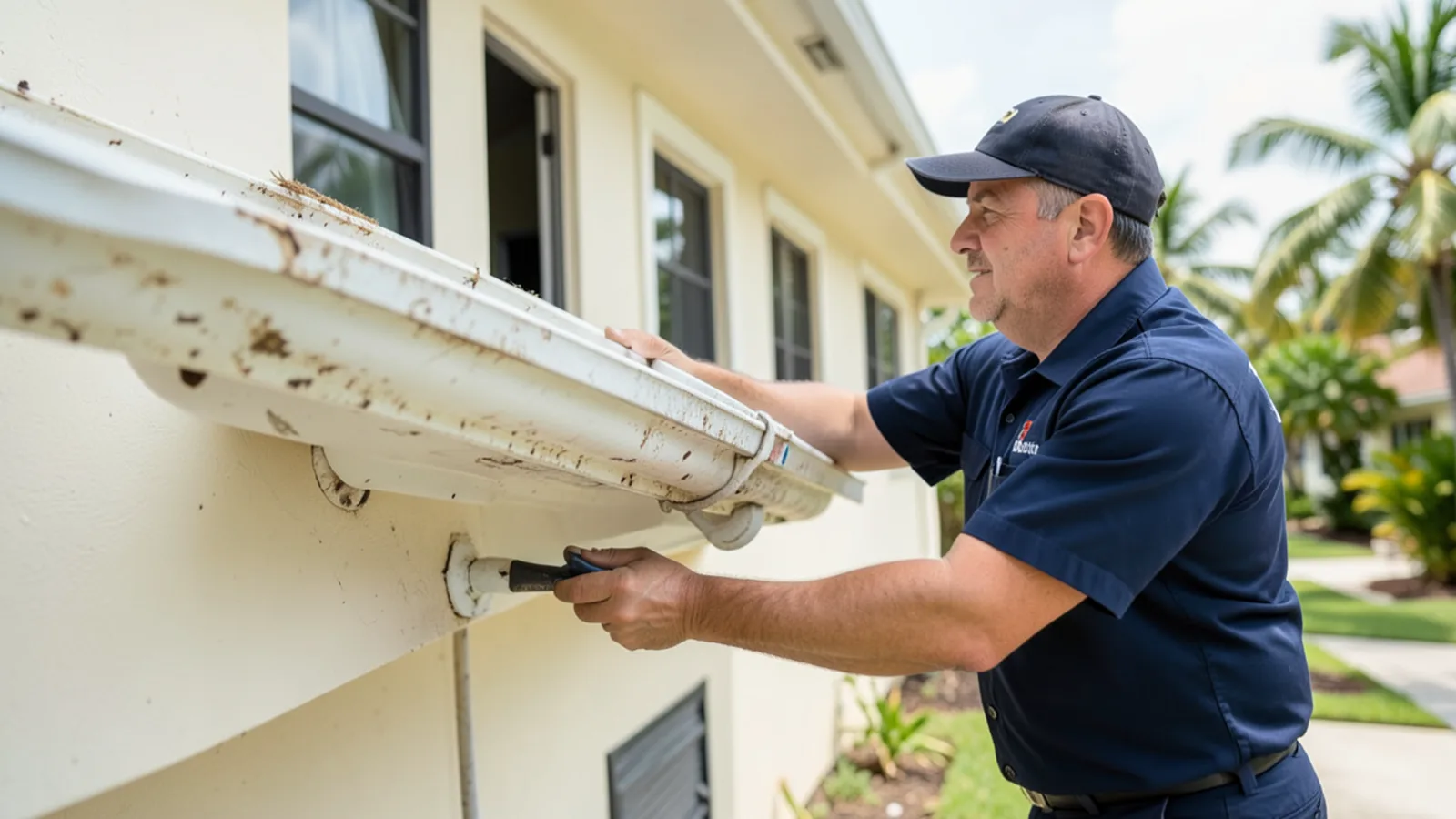
Post-Hurricane Andrew gutters in Homestead and Cutler Bay are failing after 30 years because smooth ferrule spikes have pulled out of weathered wood fascia, caulk seams have cracked under coastal UV rays, and thin .027 aluminum cannot withstand modern 175 mph High-Velocity Hurricane Zone (HVHZ) wind-uplift pressures.
The 30-Year Lifespan of 1990s Rebuild Gutter Systems
Thousands of South Dade homes rebuilt after August 1992 are now reaching the terminal phase of their exterior drainage systems.
On August 24, 1992, Category 5 Hurricane Andrew decimated South Miami-Dade County, with the eye wall passing directly over Homestead, Florida City, and Cutler Bay. In the rapid rebuilding boom that followed between 1993 and 1997, tens of thousands of concrete block and stucco (CBS) homes were reconstructed under emergency building permits. Because contractors faced massive material shortages and overwhelming demand, exterior rainwater systems were frequently installed using whatever materials were readily available at the time.
During that era, residential gutters were predominantly installed using 10-foot sectional aluminum pieces or light-gauge continuous gutters secured with 7-inch smooth nail spikes driven through hollow aluminum ferrules into wood fascia. Today, over thirty years later, these 1990s rebuild gutters have reached the absolute end of their structural lifespan. Decades of exposure to South Florida's relentless ultraviolet rays, high humidity, salt air off Biscayne Bay, and recurring tropical squalls have caused widespread fastener fatigue, miter seam separation, and hidden wood fascia rot.
Building materials used in the mid-1990s South Dade rebuilding push favored rapid construction over maximum hurricane resilience. Today's upgraded Florida Building Code standards enforce much higher mechanical fastener pullout resistance, making 30-year-old spike systems a primary structural hazard during tropical weather.
Need Professional Advice on Your Miami Roofline?
Speak directly with an experienced gutter technician from our NW 25th St shop.
Why Spike-and-Ferrule Fasteners Fail in the Hurricane Zone
Smooth nail spikes lack the mechanical grip required to resist modern wind uplift forces.
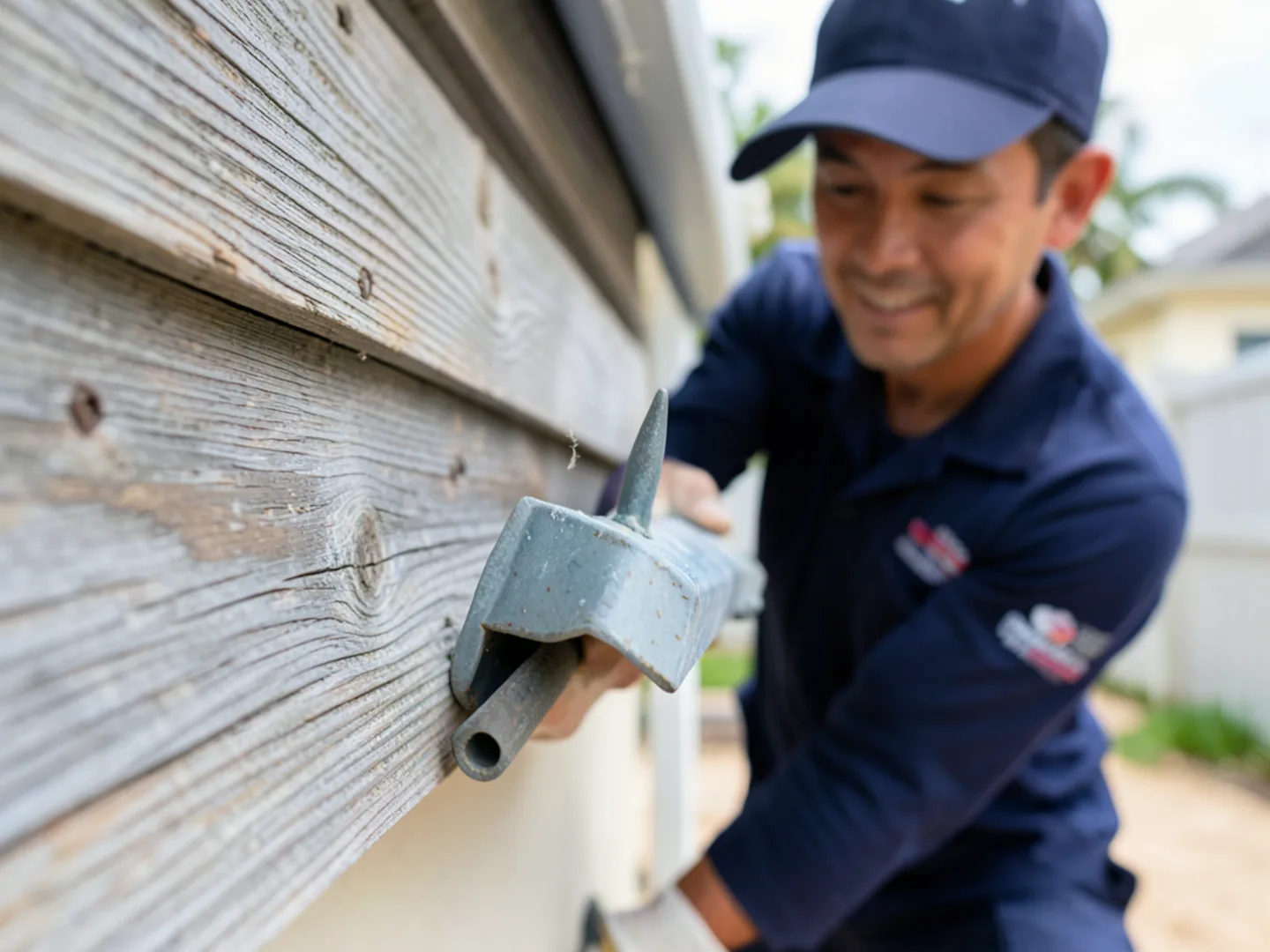
Smooth gutter spikes rely entirely on friction within the wooden fascia board. Over thirty years of wet summer expansion and winter dry contraction, the wood fibers surrounding each spike relax and lose their compression grip. Simultaneously, coastal winds off Biscayne Bay and severe thunderstorm downdrafts sweeping across the Everglades create continuous harmonic micro-vibrations along the gutter trough.
As a result, spikes back out by one to three inches. When summer downpours fill the trough with water, the immense weight causes the gutter to sag forward. During high-wind tropical storms, negative wind-shear pressure catches the loose rear lip, levering the spike completely out of the wood. This leaves the heavy metal channel swinging wildly, clattering dangerously against windows, stucco, and overhead electrical meter panels.
Furthermore, water cascading behind a pulled-out gutter continuously saturates the untreated backside of the fascia board. In South Dade's humid subtropical climate, wood rot sets in quietly behind the aluminum, destroying the structural timber that anchors your home's roof eave rafter tails.
1990s Rebuild Construction vs. Modern HVHZ Engineered Standards
Comparing original post-Andrew construction specifications with today's hurricane-rated drainage systems.
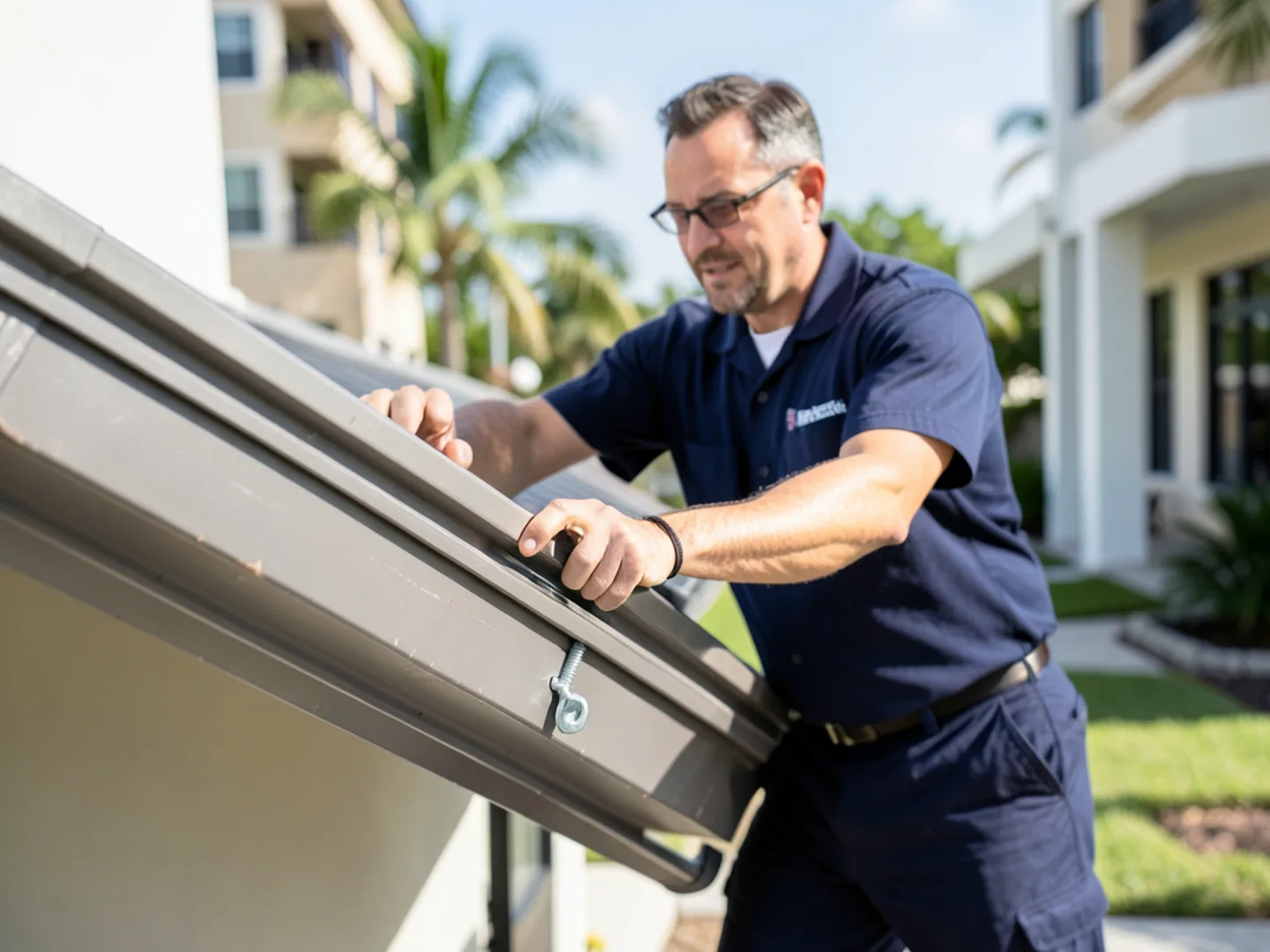
Understanding the architectural evolution between 1993 building methods and modern High-Velocity Hurricane Zone (HVHZ) requirements highlights why partial repairs are rarely effective on 30-year-old systems. Here is how original components compare to modern standards:
Fastener Technology: Smooth Ferrules vs. Internal Hidden Screw Hangers
1990s systems relied on 7-inch smooth steel or aluminum spikes driven through ferrules. Modern standards require heavy-duty internal hidden hangers clipped inside the channel and anchored into structural sub-fascia rafter tails using 3-inch ceramic-coated lag screws spaced every 16 to 24 inches, providing over 300 lbs of pull-out resistance per bracket.
Trough Engineering: 5-Inch .027 Sectional vs. 6-Inch .032 Seamless Aluminum
Original rebuilds used thin .027-gauge aluminum with caulked sectional joints every 10 to 12 feet. Today, we custom-extrude continuous .032-gauge seamless aluminum on-site, providing 44% more water volume capacity and zero leak seams along the entire roofline.
Downspout Volume: Narrow 2x3-Inch vs. Commercial 3x4-Inch Leaders
1990s homes used small 2x3-inch downspouts that discharge just 30 gallons per minute and clog on palm berries. Modern installations use oversized 3x4-inch corrugated downspouts that discharge 92 gallons per minute, flushing storm deluges instantly.
Sealant Chemistry: Standard Silicone vs. Marine Tripolymer / Polyether Sealant
Original caulks dried out and cracked under South Florida UV within 5 to 7 years. We seal all miters and drop outlets with advanced tripolymer and polyether sealants that retain 100% elasticity across decades of sun and salt exposure.
Discharge Strategy: Surface Splash Blocks vs. Buried PVC Pop-Up Emitters
1990s builders dumped water right onto plastic splash pads adjacent to concrete footings, causing soil erosion. Modern installations connect leaders to subterranean Schedule 40 PVC lines discharging safely 10 to 15 feet away into green space soakaways.
Expert Engineering Insight: TAS 105 Sub-Fascia Anchor Integrity in South Dade
Why testing wood density and replacing deteriorated fascia is essential before hanging new gutters.
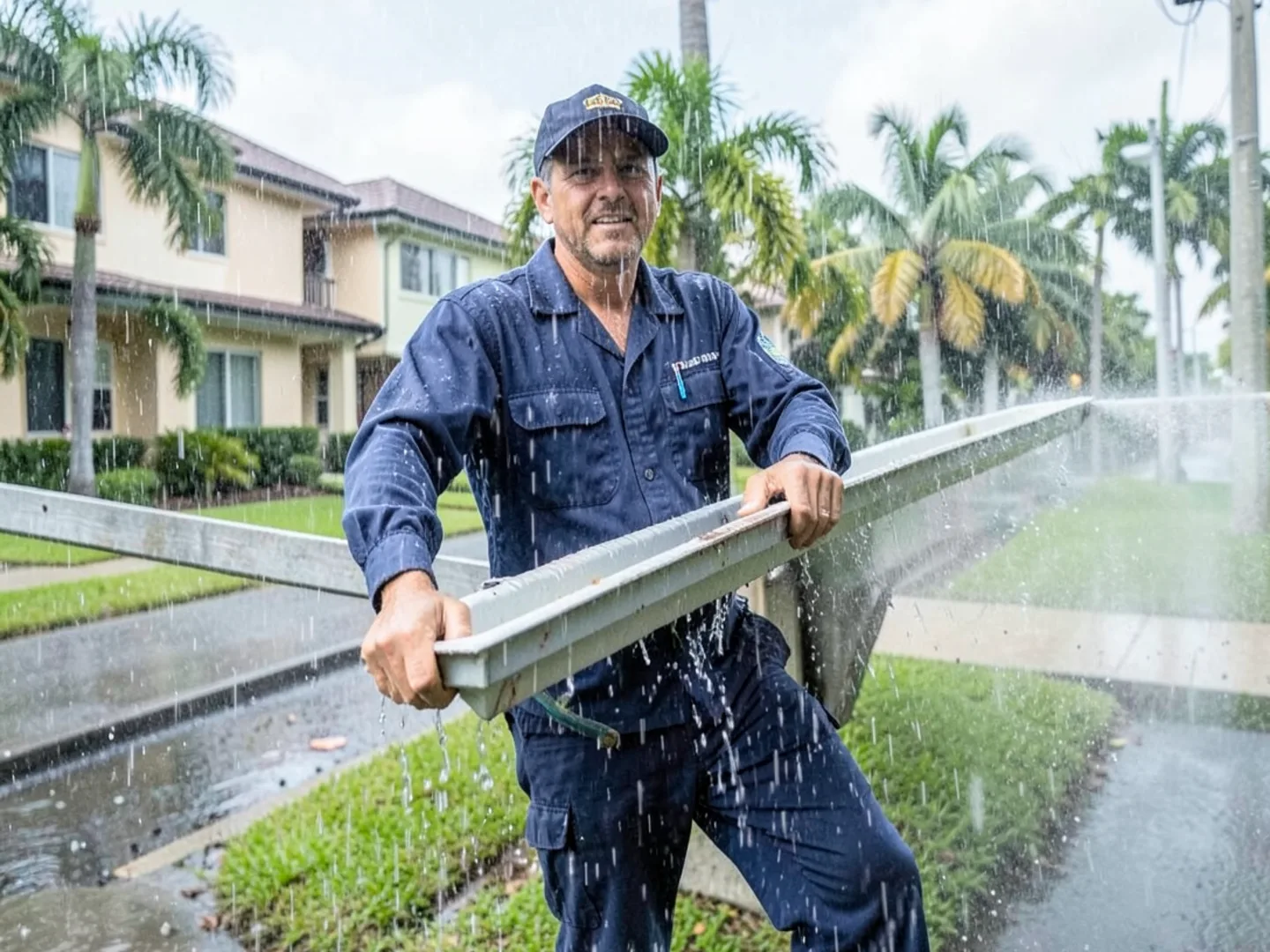
One of the most dangerous mistakes homeowners make when hiring a cut-rate contractor is allowing new seamless gutters to be screwed into existing 30-year-old fascia without a comprehensive timber inspection. Over three decades of spike pull-out, standing water overflow, and South Dade humidity, standard spruce-pine-fir (SPF) fascia boards frequently suffer from localized dry rot and subterranean termite hollows.
Under Florida Building Code Testing Application Standard (TAS) 105, fasteners must achieve verified mechanical pull-out resistance to withstand hurricane uplift forces up to 175 mph. If a screw is driven into decayed or softened wood, the fastener will strip out under moderate wind loading, jeopardizing the entire installation.
At Southern Gutters FL, our technicians probe every linear foot of wood fascia prior to installation. If wood rot is discovered, we perform surgical wood remediation—cutting back damaged timber, installing new #2 pressure-treated exterior fascia boards, and priming the wood before extruding and mounting your new seamless gutters. This honest structural preparation ensures your investment stays firmly anchored for the next thirty years.
A 5-Point Homeowner Inspection Protocol for Post-Andrew Rooflines
Warning signs that your post-Andrew gutter system requires replacement before next hurricane season.
Homeowners in Homestead, Florida City, and Cutler Bay should conduct a walk-around inspection of their home's eaves following this five-point protocol:
1. Visible Spike Back-Out and Forward Trough Sagging
Stand at the corner of your home and sight along the roofline. If you see shiny silver nail heads protruding 1 to 2 inches from the gutter face, or if the trough bows outward and sags between fasteners, the spikes have lost friction grip in the wood.
2. Dark Water and Mildew Stripes Down Exterior Stucco
Dark vertical algae stripes or grey water stains running down your CBS walls beneath the gutter line indicate that rainwater is overflowing the back of the trough and running behind the fascia board rather than flowing toward downspouts.
3. Cracked Corner Miters and Dripping Joint Seams
Inspect corner miters during a moderate rain shower. If water drips from corner seams or downspout drop outlets, the original 1990s sealant has hardened and failed, allowing acidic water to rot underlying wood corner framing.
4. Loose Downspout Straps and Wall Anchor Failure
Gently shake the downspout tubes at shoulder height. If the brackets wiggle or screws pull free from the exterior stucco, wind vibrations have loosened the masonry anchors, leaving the leaders vulnerable to hurricane detachment.
5. Soil Trenching and Concrete Slab Washout
Check the ground directly beneath your eaves. If falling water has gouged deep trenches into your lawn, washed away landscaping mulch, or exposed concrete foundation footings, your gutters are completely failing to protect your foundation.
Schedule Your Post-Andrew Gutter Assessment in Homestead & Cutler Bay
Connect with our dedicated South Dade mobile roll-forming crew.
Southern Gutters FL provides scheduled on-site assessments and precision mobile roll-forming throughout Homestead, Cutler Bay, and South Dade. Operating directly down Florida's Turnpike, our mobile factory-on-wheels brings commercial extrusion equipment directly to your driveway, fabricating unbroken .032-gauge seamless aluminum runs tailored to the exact millimeter dimensions of your home.
Do not wait for a named tropical storm to discover that your 30-year-old post-Andrew gutters are pulling free. Call Southern Gutters FL today at (855) 633-0442 to schedule your comprehensive on-site roofline inspection and receive an itemized, transparent written proposal.
Frequently Asked Questions
Why are so many 1990s gutters failing across Homestead and Cutler Bay now?
Gutters installed during the rapid post-Hurricane Andrew rebuilding boom of 1993 to 1997 have reached the end of their 30-year design life. Decades of coastal salt air off Biscayne Bay, tropical storm vibrations, and intense solar UV have degraded joint sealants and loosened smooth spike fasteners from wooden fascia boards.
Can I just hammer loose gutter spikes back into my fascia board?
No. Hammering loose spikes back into the fascia is a temporary fix that usually fails during the next heavy rain. The wood fibers inside the hole have already relaxed or rotted, meaning the spike has zero mechanical grip. The only permanent solution is replacing spikes with heavy-duty internal hidden hangers fastened with structural lag screws into solid wood.
What are High-Velocity Hurricane Zone (HVHZ) requirements for gutters in South Dade?
In South Miami-Dade's High-Velocity Hurricane Zone, building codes require exterior components to withstand wind speeds up to 175 mph. For gutters, this means heavy-gauge .032 aluminum fastened with structural hidden screw hangers anchored into sub-fascia rafter tails every 16 to 24 inches, providing over 300 lbs of pull-out resistance per bracket.
Do I need a building permit to replace post-Andrew gutters in Homestead or Cutler Bay?
No. Under Florida Building Code and Miami-Dade County administrative provisions, like-for-like rain gutter replacement and repair on single-family homes and duplexes are explicitly exempt from building permit requirements, allowing immediate installation without permitting delays.
Authored by Southern Gutters FL Installation Team
Licensed Florida Sheet Metal & Drainage Specialists • Operating from NW 25th St, Miami
Our editorial and technical guides are reviewed by senior gutter fabricators with hands-on experience installing High-Velocity Hurricane Zone compliant seamless systems across Miami-Dade County.